Heavy-duty projects demand relentless, uninterrupted equipment performance. Heavy attachments operate in harsh, debris-heavy environments every single day. Equipment failure in these demanding zones directly causes costly project delays and massive lost revenue. Poor maintenance damages much more than just the attachment itself. Sudden fluid contamination or catastrophic pressure failure severely threatens your carrier machine. A simple blown seal can quickly destroy the primary hydraulic pumps on your skid steer, excavator, or tractor. You must prevent this scenario before it happens. This guide outlines practical, evidence-based maintenance protocols to strictly protect your machinery. You will learn key operational risk factors and precise evaluation criteria for complex repairs. We share real-world, actionable strategies to efficiently extend your equipment lifespan. You can follow these exact steps to keep daily operations running smoothly and highly profitably.
Key Takeaways
Downtime Mitigation: Daily visual inspections and rigid greasing schedules prevent 80% of catastrophic pivot and cylinder failures.
Hydraulic Hygiene: Managing fluid compatibility and keeping couplers clean are critical to preventing system-wide contamination.
Operator Accountability: Most premature failures are caused by improper operation (e.g., side-loading), not manufacturing defects.
TCO Management: Knowing when to rebuild cylinders versus replacing the entire hydraulic grab attachment determines long-term profitability.
The Cost of Neglect: Why Grapple Maintenance Drives ROI
Preventative maintenance directly connects to your operational return on investment. Unplanned downtime destroys profit margins. Scheduled maintenance costs pennies compared to replacing a snapped torque tube. You must view daily maintenance as a profit-protection strategy. Many operators skip daily checks to save time. They ultimately lose days of work when equipment breaks on a critical job site. Small problems compound rapidly in high-impact environments.
A blown cylinder poses severe carrier machine risks. Contaminated fluid in the attachment threatens the primary hydraulic system. This fluid cycles directly back into your skid steer or excavator. Dirt entering the system will scour expensive internal pump components. You can ruin a multi-thousand-dollar pump because you ignored a dirty flat-faced coupler. Protecting the host machine remains your absolute top priority.
You can easily measure maintenance success. Properly maintained equipment outlasts standard warranties. You should expect zero structural weld failures. Major fluid leaks should never happen under normal use parameters. Consistent care ensures you get maximum value from your investment.
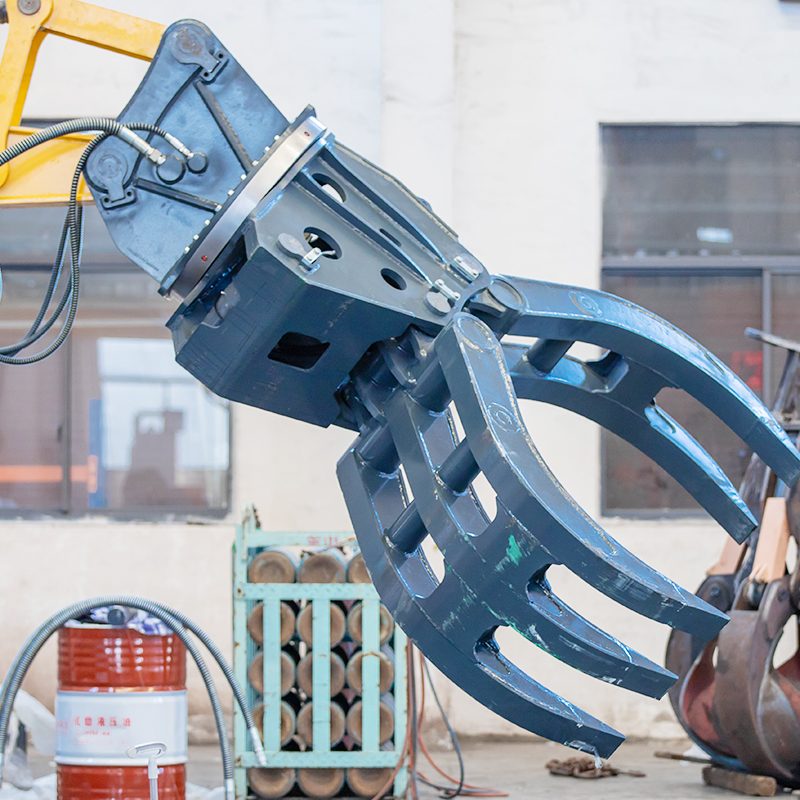
Daily Pre-Operation Checklist for Hydraulic Grab Attachments
Visual and Structural Inspections
You must perform a visual inspection before starting the engine. Look closely for hairline cracks in structural welds. Focus your attention around the torque tube and cylinder mounts. These high-stress zones absorb massive torsional forces. A tiny hairline crack will quickly spread during heavy lifting. Catching these cracks early allows for inexpensive re-welding.
Next, inspect the tines and teeth for uneven wear. Uneven wear strongly indicates uneven load distribution. It can also signal bent pivot pins. If one side of your Hydraulic Grab Attachment shows significantly more wear, you must investigate the cause immediately. Continuing to operate under misaligned conditions will eventually sheer the main pivot points.
The Greasing Protocol
Friction destroys metal. Proper greasing remains your first line of defense. You must first identify all grease zerk locations. Common locations include pivot pins, cylinder eyes, and main hinges. Missing just one hidden zerk will cause uneven wear.
You should follow a strict greasing frequency. Apply grease every 8-10 operating hours. Always use an extreme-pressure (EP) lithium grease. This specific grease withstands the heavy crushing forces these tools generate.
However, you must avoid over-greasing. Many operators pump grease until it bursts out of the seals. This common mistake blows out the protective seals. The excess grease acts like a magnet. It attracts abrasive dirt and sand. This mixture creates a grinding paste. It will rapidly destroy your pins and bushings. Pump just enough grease to see slight movement at the seal edge.
Managing Hydraulic Fluid and Cross-Contamination Risks
Addressing Fluid Compatibility
Operators frequently share attachments across different machines. This practice creates massive fluid compatibility risks. Different equipment brands often require different fluid specifications. Mixing these fluids causes hazardous chemical reactions. The fluids can emulsify or foam inside the lines. This reaction destroys the fluid viscosity. It severely limits lifting power.
You must drain and purge the fluid when moving a used attachment between mixed fleets. Connect the hoses to a recovery bucket. Cycle the cylinders manually to push old oil out. Once purged, you can safely connect the tool to the new host machine. This simple process protects the entire fleet.
Hose Routing and Quick Couplers
Improper hose routing causes frequent breakdowns. You must evaluate the hose routing carefully. Ensure you leave enough slack for full articulation. The tool must open and close fully without pulling the lines tight. Watch closely for pinch points. Hoses caught in the hinge mechanism will severe instantly.
You need a strict protocol for quick couplers. Operators must wipe down flat-faced couplers before every single connection. Use a clean, lint-free rag. Micro-debris left on the coupler enters the system immediately upon connection. It takes only a few particles of sand to score a cylinder wall. Cleanliness here prevents massive repair bills later.
Weeping vs. Leaking
You must learn to evaluate cylinder health correctly. Not all visible oil means a blown seal. You need to differentiate between weeping and leaking. Weeping shows a thin film of oil on the rod seal. This thin film safely lubricates the rod as it moves. Minor weeping remains perfectly acceptable.
Leaking presents a very different scenario. If you see oil dripping, pooling, or running down the cylinder, the seal is compromised. You require an immediate rebuild. Ignoring an active leak drops system pressure. It also invites dirt directly into the cylinder tube.
Condition Evaluation Chart: Weeping vs. Leaking | Condition | Visual Indicators | Impact on Performance | Required Action |
| Normal Weeping | Thin, translucent film on rod. No drops. | None. Pressure remains stable. | Monitor daily. Wipe excess dust. |
| Moderate Leak | Oil forms droplets at the seal base. | Slight loss of grip force over time. | Schedule seal repack soon. |
| Severe Blowout | Oil sprays or runs down the attachment. | Complete loss of clamping pressure. | Stop work immediately. Rebuild cylinder. |
Seasonal Maintenance: Adapting to Extreme Temperatures
Winter Operations
Cold weather dramatically alters operational safety. Sub-zero temperatures increase fluid viscosity. The oil becomes thick and sludgy. Thick fluid moves slowly through valves and hoses. Cold weather also causes rubber O-rings and seals to shrink. This shrinkage significantly increases the risk of cold-start blowouts.
You must perform warm-up cycling before applying heavy loads. Start your carrier machine. Let it idle for ten minutes. Gently open and close the Hydraulic Grapple without grabbing material. Cycle it five to ten times. This action pushes warm oil from the host machine into the cold attachment. It warms the seals and restores normal viscosity.
Summer Operations
Summer brings the opposite challenge. You face severe heat dissipation issues. Excessive ambient heat combines with heavy continuous cycling. This combination thins the fluid dangerously. Thin fluid bypasses internal cylinder seals. This bypassing reduces your gripping force.
High temperatures also accelerate hose degradation. UV rays and internal heat bake the rubber lines. The lines become brittle and prone to bursting. Inspect your protective hose sleeves frequently during summer months. Park equipment in the shade when possible. Give the machine brief cooling periods during intense mid-day operations.
"I Made a Mistake": Operator Errors That Destroy Grapples
Manufacturing defects rarely cause premature failures. Operator error stands as the leading cause of broken equipment. Operators often push these tools beyond their engineered limits. You must train your team to avoid these common destructive habits.
Side-Loading
Engineers design these tools for clamping. They do not design them for prying or twisting. Operators often grab a stubborn stump and twist the machine side-to-side. This action creates severe side-loading. Using the attachment as a crowbar sheers pivot pins instantly. It also bends the internal cylinder rods. Once a rod bends, it will destroy the rod seal on the next cycle.
Crushing Immovable Objects
Operators frequently try to crush materials beyond the rated capacity. They repeatedly hammer the auxiliary hydraulic button. This action attempts to bypass the machine's relief valve. Trying to crush immovable objects leads to severe cylinder over-pressurization. You will eventually blow the seals or crack the cylinder barrel. Let the machine do the work. Do not force it.
Bulldozing
Many operators open the upper jaw fully and use the backplate to push dirt. They bulldoze heavy material or back-drag aggressively. This puts extreme backward stress on the hinges. It pushes the main frame and backplate beyond their engineered tolerances. If you need to push dirt, switch to a solid bucket.
Checklist for Operator Best Practices:
Approach loads squarely to distribute weight evenly across all tines.
Release hydraulic pressure when traveling with an empty tool.
Never use the upper jaw to pull out embedded concrete or roots.
Keep the load close to the ground during transport to maintain stability.
Repair vs. Replace: Evaluating Long-Term Viability
Evaluation Criteria for Rebuilds
You will eventually face equipment failures. You must decide whether to repair or replace the unit. First, establish a clear framework for rebuilding cylinders. A leaking seal requires a simple, inexpensive repack. You can usually perform this repair in the shop.
However, you must inspect the cylinder rod carefully. Look for deep scratches, gouges, or scoring on the chrome finish. A scored rod will instantly destroy any new seal you install. If you find deep scoring, repacking wastes money. You must replace the entire cylinder.
Structural Integrity Limits
You must outline limits for structural repairs. A single cracked weld on a tine is an easy fix. Grind it out and run a new bead. However, an attachment reaches its limit when the main frame warps. If the torque tube twists permanently out of alignment, the tool is dead. Multiple repaired weld failures signal the end of safe operation. Operating severely warped equipment endangers the operator.
Shortlisting Logic & Next Steps
You must track repair costs carefully. Add up your welding bills, new hoses, replacement cylinders, and lost labor hours. If these maintenance costs exceed the amortized cost of a new unit, you must replace it. Continuing to patch a dying tool drains your profitability.
When you decide to replace, evaluate heavier-duty options. Look for commercial-grade replacements. Seek units featuring thicker steel plating and fully gusseted tines. Upgrading prevents you from repeating the same breakdown cycle.
Conclusion
Consistent, documented maintenance remains an absolute operational necessity. It is never an optional task. You protect your primary machinery when you take care of your attachments. Neglecting these daily habits guarantees costly breakdowns.
Combining strict maintenance schedules with proper operator training drives ultimate operational profitability. Teach your operators to avoid side-loading and bulldozing. Ensure they clean flat-faced couplers obsessively. Give them the time required to grease pivot pins correctly.
Audit your current attachments today. Walk your yard and inspect for hairline cracks or weeping cylinders. Consult your equipment manuals for specific torque specifications and fluid requirements. If your equipment constantly fails, contact a specialist. You can explore replacement parts or upgrade to heavier-duty commercial models to secure your operational success.
FAQ
Q: How often should I grease the pivot pins on my hydraulic grapple?
A: You should grease all pivot pins every 8 to 10 operating hours. Daily greasing prevents severe friction wear. If you operate in extremely dusty, sandy, or muddy conditions, increase this frequency to twice a day. Always use high-quality extreme-pressure (EP) lithium grease. Pump slowly and stop when you see slight movement at the seal edge.
Q: Should I drain the hydraulic fluid from a used grapple before attaching it?
A: Yes. You must purge unknown fluids to prevent cross-contamination. Mixing different fluid types or viscosities causes chemical breakdown and foaming. Connect the return hose to a waste bucket. Manually cycle the cylinders to push out the old fluid. This protects your carrier machine's sensitive internal pumps.
Q: Why is my hydraulic grab attachment losing its grip pressure?
A: Grip pressure loss usually stems from three issues. First, check for an internal cylinder bypass caused by worn piston seals. Second, inspect your quick couplers. Damaged or partially engaged couplers restrict fluid flow. Finally, verify the hydraulic fluid levels on your main carrier machine. Low fluid causes pressure drops.
Q: How do I prevent my grapple hoses from getting pinched?
A: You must evaluate your hose routing carefully. Route hoses to allow sufficient slack during full open and close cycles. Use heavy-duty nylon protective sleeves to bundle the lines together safely. Ensure the routing path stays clear of the main hinge points. Secure excess slack with zip ties away from pinch zones.

 English
 العربية
 Français
 Русский
 Español
 Português
 Deutsch
 italiano
 日本語
日本語 한국어
한국어 Nederlands
 Tiếng Việt
 ไทย
ไทย Polski
 Türkçe
 አማርኛ
አማርኛ ພາສາລາວ
 ភាសាខ្មែរ
 Bahasa Melayu
 ဗမာစာ
ဗမာစာ தமிழ்
தமிழ் Filipino
 Bahasa Indonesia
 magyar
 Română
 Čeština
 Монгол
 қазақ
қазақ Српски
 हिन्दी
 فارسی
فارسی Kiswahili
 Slovenčina
 Slovenščina
 Norsk
Norsk Svenska
 українська
 Ελληνικά
 Suomi
Suomi Հայերեն
 עברית
עברית Latine
 Dansk
Dansk اردو
اردو Shqip
Shqip বাংলা
বাংলা Hrvatski
 Afrikaans
 Gaeilge
 Eesti keel
 Māori
Māori


