Imagine halting a massive demolition project simply because your equipment grabbed the wrong load. Choosing an attachment might seem straightforward, but treating all tools equally is a fast track to broken gear. Mismatching an attachment to the wrong material type leads to premature wear, severe cylinder damage, and costly operational downtime. You must base your selection criteria on exact material density, shape irregularity, and your specific carrier machine capacity. Whether you operate a nimble skid steer or a massive heavy-duty excavator, making the right choice determines project efficiency.
We will define exactly what materials different attachments can successfully process and highlight their hard operational limitations. You will also discover a clear, actionable framework for evaluating your next equipment purchase. Matching the correct tool to the exact material ensures peak site performance and extends the lifespan of your heavy machinery.
Key Takeaways
A standard hydraulic grapple excels at handling bulky, irregularly shaped materials like demolition debris, logs, and large rocks.
Specialized variations, like the hydraulic scrap grapple, are required for high-volume metal recycling and municipal solid waste (MSW) due to specific tine configurations.
Fine, loose materials (gravel, sand) and items exceeding the carrier’s safe operating load are strict limitations.
Purchase decisions must factor in clamping force, tine spacing, and hydraulic flow compatibility (GPM) with the carrier machine.
Core Material Categories: From Demolition to Forestry
Heavy machinery relies heavily on specialized attachments to manipulate raw materials safely. A standard Hydraulic Grapple proves indispensable when managing bulky, irregular, or difficult-to-secure items. They function as mechanical hands. They allow operators to pry, lift, and sort objects quickly. We can divide their ideal operational environments into three primary categories.
Construction & Demolition (C&D) Debris
Demolition sites produce chaotic, mixed loads of materials. Operators routinely encounter shattered concrete rubble, twisted rebar, structural timber, and ripped roofing materials. Standard buckets struggle here. They cannot secure these awkward, jagged shapes safely. Instead, a specialized attachment bites down and clamps the debris tightly.
Handling C&D debris requires heavily reinforced tines. These tines must withstand extreme abrasion and sudden impact forces. When an operator pulls a steel I-beam from a collapsed structure, the tines endure massive stress. You need high-tensile steel construction to prevent the tines from bending or snapping under these harsh conditions.
Forestry and Land Clearing
Land clearing projects demand precision and brute force. Forestry applications involve handling raw logs, stubborn stumps, heavy brush, and massive root balls. This environment dictates a highly specific approach to material handling.
Attachments built for forestry often utilize 360-degree rotating heads. This rotation grants operators incredible agility. You can align a long log perfectly parallel to a logging truck bed without repositioning the entire excavator. Furthermore, the wide tine spacing lets loose soil fall away. This prevents you from transporting worthless dirt along with valuable timber.
Large Aggregates
Moving large aggregates requires serious lifting capabilities. You will often see these attachments sorting and placing riprap, boulders, and oversized paving slabs. Sea wall construction and riverbank stabilization projects rely heavily on this capability.
When handling large aggregates, operators must prioritize weight distribution. A single limestone boulder can weigh several tons. The attachment must secure the rock firmly without crushing it or dropping it abruptly. As long as the material weight remains within the safe operating limits of the carrier machine, these attachments handle heavy aggregates flawlessly.
Best Practices for Core Materials
Sort at the source: Separate timber from concrete immediately to speed up later processing.
Grip the center: Always attempt to grab long materials like pipes or logs near their center of gravity.
Shake loose dirt: Gently shake root balls before lifting them high to shed excess soil weight.
The Specialized Role of a Hydraulic Scrap Grapple
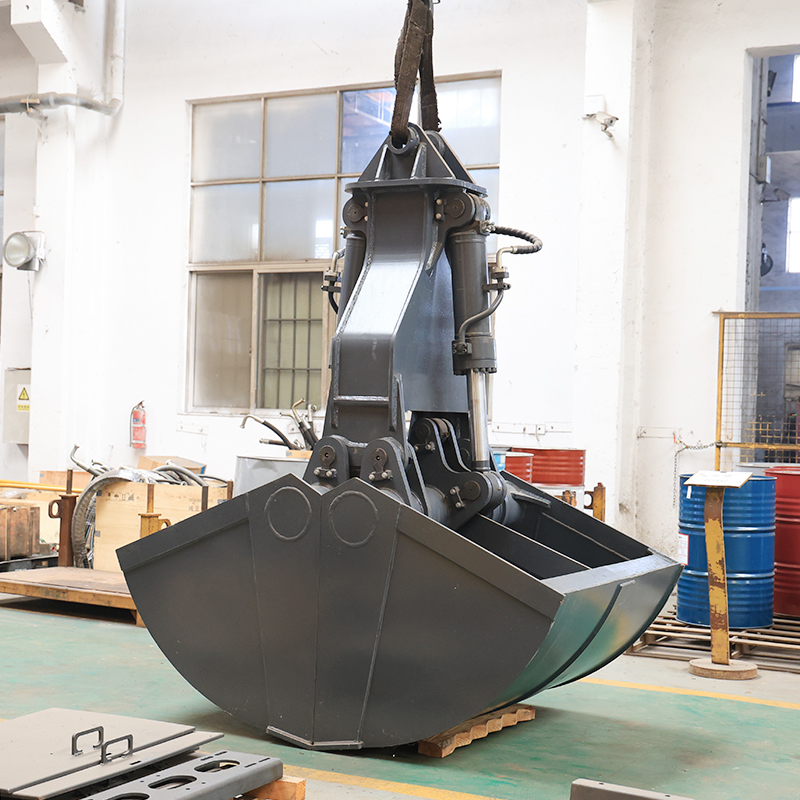
General construction attachments fall short in highly specialized recycling environments. Metal recycling and municipal solid waste facilities require specialized equipment. This brings us to the purpose-built Hydraulic Scrap Grapple. This tool features distinct engineering choices designed specifically for compressible, high-volume materials.
Target Material Capabilities
Scrap yards process highly diverse materials daily. They handle twisted scrap metal, entirely crushed vehicles, white goods like discarded refrigerators, and massive bundles of industrial wire. These items share a common trait. They are loose, compressible, and prone to shifting during transport.
Standard demolition attachments struggle here. Small pieces of valuable metal easily slip through widely spaced demolition tines. A specialized scrap attachment solves this issue directly. It secures the load firmly from multiple angles.
Design-to-Outcome Mechanics
Engineers design scrap attachments to achieve specific outcomes. They feature tighter tine spacing or utilize complex bypass and orange-peel designs. An orange-peel configuration typically features four to five distinct curved tines. These tines close together simultaneously, much like fingers curling into a fist.
This design secures loose, compressible materials perfectly. When the tines close around a pile of loose aluminum siding, they compress the material inward. The overlapping tines create a secure basket. This prevents valuable small pieces from spilling across the scrap yard floor during transit.
Maximizing Sorting Efficiency
Efficiency drives profitability in waste transfer and metal recycling. Operators must move maximum tonnage per hour. Specialized scrap attachments allow operators to sift through massive mixed piles efficiently. They can extract valuable ferrous and non-ferrous metals quickly.
The specialized design leaves unwanted dirt, glass, and smaller debris behind. Operators can effectively "rake" through a pile. They grab the valuable tangles of wire or sheet metal while allowing useless dust to sift out. This drastically reduces secondary processing times later.
Common Mistakes in Scrap Handling
Over-compressing white goods: Crushing appliances too forcefully can rupture hidden refrigerant lines.
Ignoring wire tangles: Industrial wire can spool around rotating heads if not grabbed cleanly.
Dragging the tines: Dragging tines across concrete floors accelerates wear on the steel tips rapidly.
Operational Limits: What a Grapple Should NOT Handle
Demonstrating true operational expertise requires acknowledging strict equipment boundaries. Understanding what a machine cannot do prevents catastrophic failures. Pushing attachments beyond their intended design scope guarantees expensive damage. You must recognize these hard limitations.
Fine or Flowable Materials
You should never attempt to move fine or flowable materials with these tools. Sand, dry topsoil, and fine gravel behave like liquids. They will simply fall through the tines immediately. Attempting to scoop gravel with spaced tines wastes time and fuel.
Standard solid-bottom buckets remain the only correct choice for these tasks. If your daily operations involve moving dirt and rocks equally, you must swap attachments. Relying on a single tool for both tasks creates severe operational inefficiencies.
Oversized and Overweight Monoliths
Every heavy machine has a strict tipping load limit. Every attachment has a maximum clamping rating. Attempting to lift single, massive pieces of concrete or solid steel blocks often exceeds these limits. This introduces extreme danger to the operator and the site.
Grabbing a monolith that exceeds the clamping rating risks catastrophic hydraulic failure. The hydraulic cylinders can blow seals instantly under the extreme back-pressure. Even worse, the carrier machine could tip forward violently. Operators must always verify the weight of massive objects before attempting a lift.
Hazardous and Volatile Waste
Standard heavy-duty attachments are rugged but vulnerable to specific environments. Unless an attachment is specifically rated, sealed, and coated, it should never handle hazardous waste. Corrosive chemical waste, industrial acids, or volatile sludges pose massive risks.
Standard hydraulic cylinders feature exposed chrome rods and rubber seals. Corrosive chemicals pit the chrome and melt the rubber seals rapidly. Once a seal fails, hydraulic fluid leaks out, and toxic chemicals enter the machine's hydraulic system. This ruins the entire carrier machine from the inside out.
Evaluation Framework: Matching Specs to Your Material
Purchasing the correct attachment requires a systematic evaluation. You must match specific engineering specifications directly to your primary material type. Ignoring these specifications leads to poor performance. We outline a clear evaluation framework below to guide your decision-making process.
Tine Spacing & Design
Tine spacing dictates exactly what materials you can retain and what will fall through. Wide spacing proves ideal for land clearing and forestry. Wide gaps let heavy soil and rocks fall through, reducing your overall lift weight. It ensures you only transport the brush or logs you intend to move.
Conversely, narrow or solid-bottom spacing serves waste transfer and scrap recycling. You need tight gaps to retain small, loose metal pieces. Bypass designs, where the tines overlap each other when closed, allow you to secure items of wildly varying sizes tightly. Non-bypass designs, where tines meet tip-to-tip, provide better precision for picking up uniform items like single large boulders.
Clamping Force vs. Material Yield
You must assess the hydraulic pressure required to secure your materials. Clamping force determines how tightly the tool holds the load. However, excessive clamping force can actually damage fragile materials or even compromise the attachment's structural integrity if used incorrectly.
Scrap metal requires high clamping force to crush and condense the load. Handling delicate cut stone requires precise, lower-force clamping to prevent shattering the material. You must align the cylinder bore size and machine pressure with your desired material yield.
Fixed vs. 360-Degree Rotation
Your application environment dictates your rotation needs. Fixed attachments mount directly to the stick. They offer maximum durability for heavy prying, ripping, and aggressive demolition tasks. They have fewer moving parts, which means fewer potential failure points under extreme stress.
Rotating attachments provide necessary agility. They allow a full 360-degree spin. This proves essential for forestry, pipe laying, and precision sorting. A rotating head lets the operator align the tool perfectly without moving the heavy carrier machine's tracks. This saves massive amounts of time and prevents unnecessary ground disturbance.
Material Grade Focus
The steel quality used in the attachment dictates its lifespan. You must verify the use of high-tensile, abrasion-resistant steel. Look specifically for AR400 or AR500 steel on the primary wear edges and tine tips.
Handling abrasive concrete, scrap steel, and granite wears down standard mild steel rapidly. Investing in AR500 steel tips upfront prevents costly welding repairs later. High-grade steel resists gouging and maintains its structural shape far longer under harsh conditions.
Material Specification Chart
| Material Type | Recommended Tine Design | Rotation Requirement | Steel Grade Focus |
| Forestry/Logs | Wide spacing, Bypass | 360-Degree Rotating | AR400 (Structural) |
| C&D Debris | Medium spacing, Non-bypass | Fixed (for prying strength) | AR500 (Wear edges) |
| Scrap Metal | Orange-peel or tight Bypass | 360-Degree Rotating | AR500 (Full tine) |
| Large Boulders | Tip-to-tip (Non-bypass) | Fixed | AR400 with reinforced gussets |
Implementation Risks & Carrier Compatibility
Buying an exceptional tool means nothing if it does not match your carrier machine. Implementation risks arise when buyers ignore the technical compatibility between the attachment and the excavator or skid steer. You must verify several critical engineering metrics before mounting a new tool.
Verify Auxiliary Hydraulic Flow (GPM): Your carrier machine must provide the exact Gallons Per Minute (GPM) the attachment requires.
Check Operating Pressure (PSI): The carrier's pressure must match the cylinder limits. Exceeding PSI limits blows internal seals immediately.
Assess Carrier Lifting Capacity: You must deduct the attachment's empty weight from the machine's total lifting limit.
Hydraulic Flow Matching
Hydraulic flow matching stands as the most critical implementation step. You must ensure your carrier machine’s Auxiliary GPM and PSI match the manufacturer's requirements perfectly. If your machine delivers too little flow, the attachment operates sluggishly. The tines will open and close at agonizingly slow speeds, destroying daily productivity.
If your machine delivers too much pressure, you risk catastrophic damage. Over-pressurizing the cylinders will quickly cause blown seals or ruptured hydraulic lines. Always consult your machine's manual and adjust the auxiliary flow settings before engaging the tool for the first time.
Carrier Weight and Stability
Heavy-duty tools add significant weight to the end of your machine's boom. You must factor the specific weight of the attachment itself into the skid steer, track loader, or excavator’s total lifting capacity. Ignoring this alters the machine's center of gravity dangerously.
A heavy attachment reduces your actual material payload. If your excavator lifts 10,000 pounds, and the new tool weighs 3,000 pounds, your safe material limit is now only 7,000 pounds. Operating beyond this adjusted threshold compromises machine stability and increases rollover risks on uneven terrain.
Maintenance Realities
Daily maintenance ensures equipment longevity. These tools operate in harsh, dirty environments. Dust, grit, and moisture constantly attack moving parts. You must implement a rigorous daily maintenance routine to prevent unexpected breakdowns.
Operators must grease all pivot points daily. Dry pins will gall and snap under heavy loads. You must also inspect the exposed hydraulic hoses for abrasion wear. Verify that all protective cylinder guards remain intact and unbent. Finally, check the structural welds and replace the heavy wear edges as soon as they round off. Staying proactive with physical maintenance keeps the machine operating safely and smoothly.
Conclusion
The right hydraulic attachment completely transforms a standard carrier machine. It turns a basic excavator into a high-efficiency sorting, lifting, and loading powerhouse. However, this transformation only succeeds provided the equipment specifications align perfectly with your daily material type.
Your shortlisting logic should remain simple and objective. First, rigorously audit your primary material type. Second, check your carrier machine’s exact hydraulic output and lifting capacity. Third, prioritize high build quality, such as AR-grade steel and heavy cylinder protection, over the lowest upfront cost.
Your next step requires expert validation. Consult with a specialized attachment dealer today. Provide them with your exact carrier make and model, alongside your target daily material tonnage. This ensures you receive an accurate, technically sound equipment recommendation.
FAQ
Q: Can a hydraulic grapple dig into solid ground?
A: No. Grapples are designed for grabbing and sorting loose or surface-level materials, not for heavy excavation or prying unbroken ground. Attempting to trench or dig into compacted soil will bend the tines and place extreme stress on the hydraulic cylinders.
Q: Do I need a bypass grapple or a non-bypass grapple?
A: Bypass grapples (tines overlap) are best for varying sizes of debris and securing thin items (like branches). Non-bypass (tines meet tip-to-tip) are better for picking up bulky, uniform items like large logs or boulders where you need precise tip control.
Q: How does a hydraulic scrap grapple differ from a standard root grapple?
A: Scrap grapples typically feature solid bottoms or tighter tines to retain smaller, loose metal pieces, whereas root grapples are open to allow soil to sift through. Scrap attachments also utilize specialized cylinder guards to deflect sharp, unpredictable metal debris.

 English
 العربية
 Français
 Русский
 Español
 Português
 Deutsch
 italiano
 日本語
日本語 한국어
한국어 Nederlands
 Tiếng Việt
 ไทย
ไทย Polski
 Türkçe
 አማርኛ
አማርኛ ພາສາລາວ
 ភាសាខ្មែរ
 Bahasa Melayu
 ဗမာစာ
ဗမာစာ தமிழ்
தமிழ் Filipino
 Bahasa Indonesia
 magyar
 Română
 Čeština
 Монгол
 қазақ
қазақ Српски
 हिन्दी
 فارسی
فارسی Kiswahili
 Slovenčina
 Slovenščina
 Norsk
Norsk Svenska
 українська
 Ελληνικά
 Suomi
Suomi Հայերեն
 עברית
עברית Latine
 Dansk
Dansk اردو
اردو Shqip
Shqip বাংলা
বাংলা Hrvatski
 Afrikaans
 Gaeilge
 Eesti keel
 Māori
Māori


