Pile drivers are essential machines in construction and foundation work, playing a crucial role in driving piles deep into the ground to provide a stable base for buildings, bridges, and other infrastructure projects. These machines are designed to transfer significant force to piles, ensuring they reach the required depth to support structures safely and securely. In modern construction, pile drivers have evolved significantly, incorporating advanced technologies that not only improve efficiency but also enhance precision and safety during installation. Modern pile drivers offer faster pile driving speeds, reduced noise, and more environmentally-friendly operations, which contribute to greater project efficiency and cost savings. Their ability to adapt to a variety of ground conditions and construction requirements ensures that foundations are not only stable but also installed in a timely manner, helping projects stay on track and within budget. Ultimately, pile drivers are vital in providing foundation stability and ensuring the longevity of structures, making them indispensable in the construction industry.
What is a Pile Driver?
A pile driver is a construction machine used to install piles—long, slender columns made of wood, concrete, or steel—into the ground to provide a stable foundation for buildings, bridges, and other structures. Pile drivers apply strong force to drive piles deep into the soil, anchoring them securely to support heavy loads. This process is crucial in areas with poor soil conditions or for structures that need deep foundations to reach stable ground. The pile driver’s primary function is to transfer energy to the pile, causing it to penetrate the ground to the desired depth, ensuring structural integrity.
1. Types of Pile Drivers
Impact Pile Drivers
Impact pile drivers use a heavy hammer to repeatedly strike the pile, pushing it deep into the ground. They are ideal for hard soils and dense ground where high force is needed to penetrate. Impact drivers are commonly used for large-scale projects like bridges and high-rise buildings.
Vibratory Pile Drivers
Vibratory pile drivers use high-frequency vibrations to reduce soil resistance, allowing faster and smoother pile installation. They are especially effective for soft soils or in urban environments, where minimizing noise and vibration is important. Vibratory drivers are more efficient for large quantities of piles and quicker installations.
Auger Pile Drivers
Auger pile drivers use a rotating drill (auger) to bore into the ground, creating a hole for the pile. This method is ideal for clay or sandy soils and produces less vibration and noise compared to impact or vibratory drivers. It’s particularly useful for smaller projects requiring precision and minimal disruption.
2. Choosing the Right Pile Driver for the Job
Selecting the right pile driver depends on soil conditions, project size, and environmental factors. Impact pile drivers are best for harder ground, vibratory drivers excel in soft soils and quick installations, while auger pile drivers are preferred for precision and reduced environmental impact. By understanding each type's benefits and limitations, professionals can choose the best option for cost-effective, efficient, and safe pile installation.
Key Advantages of Modern Pile Drivers
Modern pile drivers have undergone significant advancements in both technology and design, making them more efficient, safe, and environmentally friendly than ever before. These improvements have made modern pile drivers essential in construction projects that require deep foundations, such as bridges, high-rise buildings, and infrastructure. Below are the key advantages that modern pile drivers bring to the table.
1. Efficiency: Faster Pile Driving with Advanced Technology
Modern pile drivers use advanced hydraulic systems, high-frequency vibrations, and automation to dramatically increase the speed and efficiency of pile installation. With faster driving speeds, these pile drivers can install large volumes of piles in a shorter amount of time, helping to keep construction projects on schedule. Automated and intelligent control systems also help reduce downtime and improve operational efficiency, allowing for smoother and faster progress on site.
2. Precision: Improved Accuracy in Pile Installation
Modern pile drivers offer improved precision in pile placement, ensuring that each pile is driven to the correct depth and alignment. Advanced positioning systems, GPS tracking, and real-time monitoring technologies help operators control the pile installation with greater accuracy. This precision is critical for ensuring that the foundation meets design specifications and performs optimally over time. Enhanced precision also reduces errors and the need for costly corrections.
3. Reduced Noise and Vibration: Quiet and Environmentally-Friendly Options
Traditional pile drivers, especially impact hammers, often generate significant noise and vibrations, which can disturb nearby communities and the environment. Modern pile drivers, such as vibratory and static pile drivers, are designed to be quieter and produce less vibration. These technologies not only minimize noise pollution but also make pile driving feasible in sensitive urban environments or areas near existing structures, without compromising the quality of installation. This reduction in noise and vibration makes modern pile drivers more environmentally friendly and suitable for a broader range of projects.
4. Safety: Enhanced Operator Safety Features in Modern Pile Drivers
Safety is a major priority in modern pile driving technology. Modern pile drivers are equipped with advanced safety features, such as automated operation, remote monitoring, and enhanced protective enclosures. These systems help protect the operators from potential risks associated with pile driving, such as flying debris, equipment malfunctions, and exposure to extreme working conditions. Remote-controlled pile drivers also enable operators to work from a safe distance, further minimizing the risk of injury on the job site.
5. Cost-Effectiveness: Reduced Project Costs and Labor Expenses
Modern pile drivers are designed to be more cost-effective than their older counterparts. With improved efficiency and precision, they reduce the need for manual labor and costly corrections. The faster installation speeds also lead to shorter project timelines, which reduces labor costs and enhances overall productivity. Moreover, the ability to handle a variety of ground conditions with fewer machines or attachments lowers the capital investment required for large-scale projects.
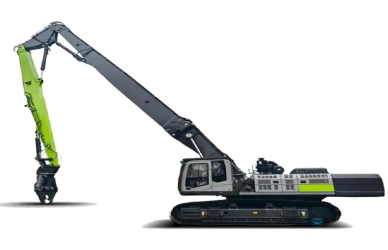
Types of Modern Pile Drivers
Modern pile drivers come in various types, each designed to suit different ground conditions and project needs. The primary types include vibratory pile drivers, static pile drivers, and high-frequency impact pile drivers. Below are their descriptions and key pros and cons.
1. Vibratory Pile Drivers
Vibratory pile drivers use high-frequency vibrations to reduce soil resistance, allowing for quicker installation.
Pros:
Fast installation: Reduces driving time, especially in soft soils.
Low noise and vibration: Ideal for urban areas with noise restrictions.
Efficient in soft soil: Works well in loose or sandy conditions.
Cons:
Less effective in hard ground: Struggles with dense soils.
Ground disturbance: Vibrations may affect nearby structures.
2. Static Pile Drivers
Static pile drivers use a hydraulic system to apply continuous pressure without vibration, making them suitable for sensitive areas.
Pros:
Quiet and low impact: No noise or vibration, ideal for urban settings.
Precise control: Accurate pile depth and alignment.
Versatile: Works in both soft and dense soils.
Cons:
Slower installation: Takes more time compared to vibratory drivers.
Higher cost: Initial investment can be significant.
3. High-Frequency Impact Pile Drivers
High-frequency impact pile drivers combine traditional hammering with high-frequency action for faster pile driving in tough conditions.
Pros:
Speed: Faster than traditional impact drivers.
Effective in hard soils: Can penetrate dense ground more easily.
Lower noise: Quieter than traditional impact drivers.
Cons:
Higher cost: More expensive and requires maintenance.
Vibration concerns: Still causes some vibrations that can affect nearby structures.
4.Summary of Pros and Cons
Type | Pros | Cons |
Vibratory Pile Drivers | Fast installation, low noise, efficient in soft soil | Less effective in hard soil, ground disturbance risk |
Static Pile Drivers | Quiet, precise, versatile in soil types | Slower, higher initial cost |
High-Frequency Impact Drivers | Fast, efficient in hard soils, quieter than impact drivers | Expensive, vibration risk to nearby structures |
Applications of Modern Pile Drivers
Modern pile drivers are essential for securing foundations in construction projects, especially where ground conditions are challenging. Their ability to drive piles deep into various soil types makes them a key tool in foundation work for buildings, bridges, and infrastructure.
1. Foundation Work for Buildings, Bridges, and Infrastructure
Pile drivers are used to create strong foundations for buildings, bridges, and infrastructure projects. Piles anchor structures to stable ground, ensuring safety and stability, even in soft or unstable soils.
Buildings: Provide stable foundations in urban areas with weak ground.
Bridges: Essential for bridge foundations, especially in waterlogged or flood-prone areas.
Infrastructure: Used for roads, tunnels, and other critical infrastructure in tough environments.
2. Use in Challenging Ground Conditions
Modern pile drivers are designed for use in challenging ground conditions, such as soft soils, dense rock, and coastal or marshy areas.
Soft Soils: Pile drivers can anchor piles deeper into more stable layers, providing a solid base where traditional foundations would fail.
Dense Rock: Impact and high-frequency pile drivers can penetrate tough rock layers to reach solid ground.
Coastal and Marshy Areas: Piles provide stability in unstable or waterlogged ground, offering secure foundations even in difficult conditions.
FAQ (Frequently Asked Questions)
1.How do modern pile drivers improve efficiency?
Modern pile drivers use advanced hydraulic and vibratory technologies that speed up pile installation while ensuring consistency and accuracy.
2.Are there environmentally-friendly pile drivers available?
Yes, modern pile drivers include low-noise, low-vibration, and eco-friendly models that reduce environmental impact during construction.
3.What is the difference between impact and vibratory pile drivers?
Impact pile drivers use a hammer to drive piles into the ground, while vibratory pile drivers use high-frequency vibrations to move piles, offering less noise and quicker installation.
4.Can modern pile drivers be used in challenging ground conditions?
Yes, modern pile drivers are designed to handle various ground conditions, including soft soils, dense rock, and urban environments, making them highly versatile in different construction projects.
Conclusion
Modern pile drivers play a critical role in the construction industry, ensuring that foundations are secure, stable, and capable of supporting heavy loads in a variety of challenging ground conditions. With their advanced technologies, pile drivers have improved efficiency, precision, and safety, making the installation process faster and more cost-effective. They have revolutionized foundation work for buildings, bridges, and infrastructure projects, especially in areas with soft soils, dense rock, or coastal regions. As the construction industry continues to evolve, future trends in the pile driving sector are likely to focus on further automation, eco-friendly innovations, and smart technologies such as AI-driven systems and remote monitoring. These advancements will not only enhance the performance and efficiency of pile drivers but also reduce environmental impacts and improve sustainability, ensuring safer and more efficient foundation solutions for years to come.

 English
 العربية
 Français
 Русский
 Español
 Português
 Deutsch
 italiano
 日本語
日本語 한국어
한국어 Nederlands
 Tiếng Việt
 ไทย
ไทย Polski
 Türkçe
 አማርኛ
አማርኛ ພາສາລາວ
 ភាសាខ្មែរ
 Bahasa Melayu
 ဗမာစာ
ဗမာစာ தமிழ்
தமிழ் Filipino
 Bahasa Indonesia
 magyar
 Română
 Čeština
 Монгол
 қазақ
қазақ Српски
 हिन्दी
 فارسی
فارسی Kiswahili
 Slovenčina
 Slovenščina
 Norsk
Norsk Svenska
 українська
 Ελληνικά
 Suomi
Suomi Հայերեն
 עברית
עברית Latine
 Dansk
Dansk اردو
اردو Shqip
Shqip বাংলা
বাংলা Hrvatski
 Afrikaans
 Gaeilge
 Eesti keel
 Māori
Māori


