Standard buckets and rigid attachments severely limit modern sorting environments. High-variability loading operations quickly expose these basic tools as primary operational bottlenecks. They simply cannot adapt fast enough to handle irregular, unpredictable debris. Imprecise handling generates severe hidden losses across job sites every single day. Dropped materials demand constant rework, while awkward loading angles create costly void space inside hauling trucks. Furthermore, operators must constantly reposition the entire carrier machine just to grab objects, wasting fuel and destroying undercarriage components.
We will explore how upgrading to an active precision tool completely resolves these daily friction points. You will discover the exact mechanical advantages driving this critical shift from blunt-force scooping to targeted, secure manipulation. Read on to learn how smart attachment selection directly accelerates cycle times and boosts overall productivity.
Key Takeaways
Cycle time reduction: 360-degree continuous rotation eliminates the need to constantly reposition the carrier machine.
Load security & payload density: Independent hydraulic cylinders allow jaws to conform to irregular objects, increasing clamp force and reducing spillage.
Carrier compatibility limits: Successful implementation requires exact matching of the grapple weight and hydraulic flow requirements to the host excavator or skid steer.
Application-specific geometries: Efficiency gains depend heavily on selecting the correct tine configuration (e.g., demolition vs. logging vs. dredging).
The Baseline Problem: Where Static Attachments and Mechanical Grapples Fall Short
Mechanical stiff-arm grapples lock directly onto the bucket cylinder. This primitive design restricts operational movement severely. It limits your ability to grasp asymmetrical debris securely. When materials shift mid-air, static jaws cannot adapt their grip. Operators end up relying on pure brute force. They crush valuable items instead of grasping them securely.
To align rigid jaws properly, operators must constantly pivot the entire excavator. They maneuver tracks across rough terrain just to grab a single concrete slab. This endless repositioning accelerates undercarriage wear exponentially. It also burns massive amounts of diesel fuel unnecessarily. Over time, operator fatigue sets in quickly, leading to sloppy handling and increased safety risks.
Separating mixed materials proves incredibly difficult using standard buckets. You cannot easily pull steel rebar away from crushed concrete blocks. Operators usually scoop everything together into one contaminated pile. This clumsy approach forces downstream recycling centers to sort incoming materials manually. Such inefficient field sorting heavily degrades your daily processing volumes.
Core Mechanisms: How a Hydraulic Grapple Drives Active Cycle Time Reduction
An advanced Hydraulic Grapple transforms a basic excavator into a highly articulated robotic arm. We see massive productivity gains stemming directly from three core mechanical innovations. These engineered systems actively reduce friction across the entire material handling cycle.
Continuous 360-degree hydraulic rotation: Powered rotation allows operators to grab, align, and precisely place materials without moving the tracks. You never need to pivot the base machine to find the right angle. Operators simply hover the boom, rotate the jaws perfectly, and descend onto the target.
Conforming jaw pressure: Dual, independently operating hydraulic cylinders secure uneven loads brilliantly. These active cylinders apply consistent clamping force continuously. If a log shifts slightly during a lift, the cylinders adjust instantly to maintain firm contact. This dynamic pressure prevents dangerous mid-air material loss.
Increased hauling payload density: Precise placement capabilities allow you to pack outbound trucks tightly. Instead of dropping chaotic piles into a dump bed, operators lay materials flat and organized. Tightly packed trucks carry far less empty air, reducing your total daily hauling trips.
These active mechanisms shift the workload away from the carrier machine's tracks. The attachment itself handles the complex maneuvering. You reduce fuel consumption while moving tons of debris much faster.
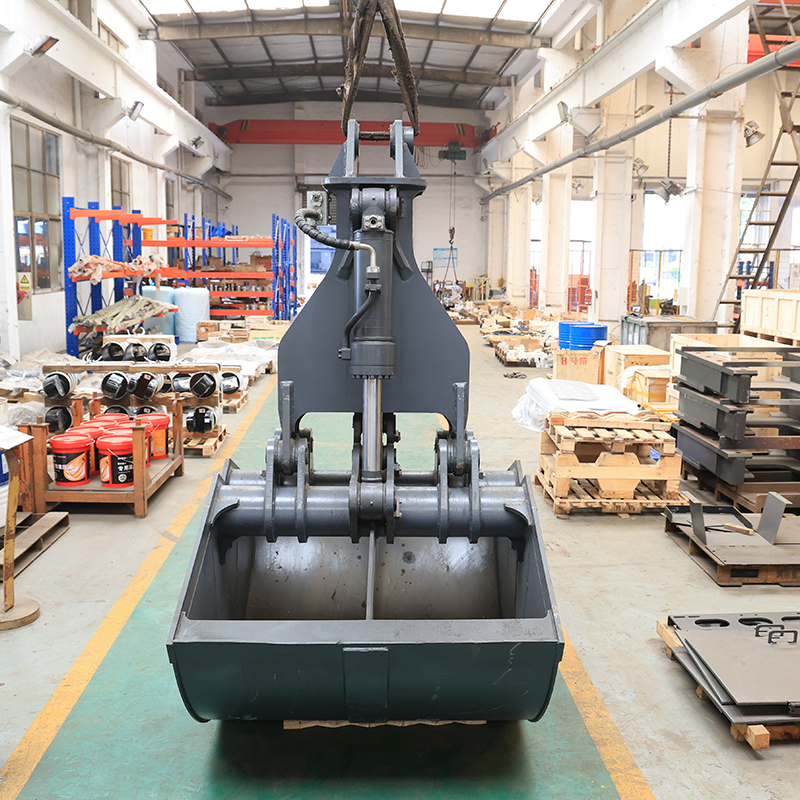
Matching the Material Handling Grapple to the Application
Selecting the correct Material Handling Grapple requires deeply understanding your primary daily tasks. Manufacturers design wildly different jaw geometries to tackle specific operational challenges. You cannot expect a lightweight forestry tool to survive a brutal demolition site.
Demolition and scrap processing environments demand extreme durability. You should focus entirely on heavy-duty, reinforced models. These attachments must pry, pull, and rip abrasive materials apart daily. Thick solid tines handle jagged concrete chunks and twisted steel rebar safely.
Port management and dredging operations require entirely different physics. You must prioritize clamshell-style hydraulic configurations here. These closed-shell designs specialize in bulk transfer and underwater sediment removal. They prioritize massive volume capacity over surgical precision. Submerged operations also require fully sealed cylinders to prevent water intrusion.
Forestry and logging applications rely heavily on bypass-jaw designs. Bypass tines cross over one another tightly when closed. This overlapping geometry lets you secure a single small branch firmly. Simultaneously, the jaws can open wide enough to clamp massive, multi-stem log bundles securely.
Waste and recycling centers handle bulky but lightweight municipal solid waste. Equipment here uses ribbed or perforated tines. The gaps between the structural ribs allow loose dirt and useless fines to sift out mid-air. You retain the valuable bulky waste while leaving the heavy dirt behind.
| Application Environment | Optimal Tine Configuration | Primary Engineering Focus |
| Demolition & Scrap | Solid, Heavy-Duty Reinforced | Prying strength and extreme abrasion resistance. |
| Port Management & Dredging | Clamshell / Closed Shell | Bulk volume capacity and fully sealed underwater cylinders. |
| Forestry & Logging | Bypass Interlocking Jaws | Tight gripping of small logs and large bundle security. |
| Waste & Recycling | Ribbed or Perforated Sifting | Retaining bulky items while dropping loose soil and fines. |
Evaluation Criteria: What to Look for When Shortlisting a Hydraulic Grapple
Finding the right tool demands careful structural evaluation before purchase. The physical build quality determines how long the attachment survives in the dirt. We look at four specific material and design categories when evaluating any new unit.
Material grade dictates overall wear resistance. You must establish AR400 or AR500 high-tensile steel as your absolute baseline requirement. Manufacturers must use these hardened metals for all tines, cutting edges, and major wear surfaces. Standard mild steel bends and warps under typical crushing pressures.
Component protection keeps the machine running. Stray debris constantly threatens delicate hydraulic lines. Look closely for fully enclosed or heavily guarded hydraulic cylinders. Well-designed units route flexible hoses internally through the main housing. This internal routing prevents jagged scrap metal from slicing hoses open mid-shift.
Pivot point durability prevents structural twisting. Evaluate the physical size of the main hinge pins. You want oversized, hardened pins carrying the load. The presence of greasable or completely sealed bushings is mandatory. These robust joints withstand extreme torsional stress when you pull materials from awkward angles.
Serviceability ensures operators actually perform daily maintenance. Assess the physical placement of grease zerks. Are they easy to reach? Look for removable access panels that make field maintenance painless. If mechanics struggle to reach internal hoses, they will likely skip vital inspections.
Component Evaluation Chart
| Component Group | Standard Requirement | Red Flags to Avoid |
| Structural Steel | AR400 or AR500 grade | Mild steel construction on wear points. |
| Hydraulic Cylinders | Enclosed or steel-shielded | Exposed rods facing the loading zone. |
| Hose Routing | Internally routed via bulkheads | Loose, dangling exterior rubber lines. |
| Pivot Hinge Pins | Oversized, heat-treated steel | Small pins lacking protective bushings. |
| Maintenance Access | Recessed, easily visible grease zerks | Zerks hidden behind welded plates. |
Implementation Realities, Carrier Risks, and Hidden Costs
Deploying advanced attachments introduces specific engineering challenges. You cannot simply pin a powered tool onto an old excavator and start digging. Proper implementation requires rigorous mechanical matching to prevent catastrophic machine damage.
You must exactingly match hydraulic flow and pressure parameters. The attachment demands a specific GPM (gallons per minute) and PSI to function. If these metrics do not align perfectly with your carrier machine’s auxiliary circuit, performance plummets. Sluggish, unresponsive operation occurs when flow falls short. Conversely, pushing excessive pressure through the circuit easily blows out expensive cylinder seals.
Operators must calculate tipping load limitations carefully. Warn your fleet managers against severely over-sizing the attachment. Heavy-duty models carry immense dead weight. This tare weight immediately reduces your excavator’s net lifting capacity. Attempting to lift heavy debris while fully extended causes dangerous carrier instability.
Assess your machine's existing plumbing infrastructure immediately. Most continuous rotation tools require a specialized dual-circuit auxiliary hydraulic kit. One circuit handles the jaw opening and closing functions. The second independent circuit manages the rotation motor. If your host machine lacks factory plumbing, adding aftermarket steel lines becomes a mandatory upfront requirement.
Finally, anticipate a brief operator learning curve. Transitioning from basic single-function buckets to multi-function joystick controls takes practice. Give your operators dedicated time to learn the new control mapping. Rushing them directly into high-pressure loading scenarios invites accidental collisions and dropped loads.
Conclusion
Upgrading to an active precision tool fundamentally alters how your job site moves material. This technology is not just another basic attachment. It serves as a direct upgrade to the carrier machine's core capabilities. By introducing 360-degree rotation and independent cylinder pressure, you systematically eliminate wasted machine movements. This targeted approach directly impacts daily throughput, operator fatigue, and site safety.
Take immediate action by auditing your current carrier machine before requesting quotes. Document your exact hydraulic flow rate, maximum operating pressure, and safe tipping load. Next, clearly define your primary daily material types. Bring this precise data to a trusted manufacturer. They will use these specifications to configure a tailored, high-performance solution matching your exact operational reality.
FAQ
Q: What is the difference between a mechanical and a hydraulic grapple?
A: Mechanical grapples use a rigid stiff-arm connected to the bucket cylinder. They rely entirely on the boom's curl action to close. Conversely, powered models feature independent hydraulic cylinders. This active system controls the jaws directly. It allows operators to apply continuous, conforming pressure to irregular shapes without moving the main boom.
Q: Can any excavator run a rotating hydraulic grapple?
A: No. Excavators require specific auxiliary hydraulic setups to operate them. A rotating attachment needs two distinct hydraulic circuits. One circuit controls the jaw opening and closing. The second circuit powers the 360-degree continuous rotation. You must also ensure your machine provides the correct flow rate (GPM) and operating pressure (PSI).
Q: How does a material handling grapple impact lifting capacity?
A: Every attachment carries a specific tare weight. You must deduct this dead weight from your excavator's overall safe working load. Heavy-duty models reduce the actual payload you can lift safely. Exceeding these revised limits causes severe instability, especially when you extend the boom to its maximum forward reach.
Q: What maintenance is required for a hydraulic grapple?
A: Routine maintenance prevents catastrophic field failures. Operators must grease all main pivot points daily. You should inspect routed hoses regularly for dangerous chafing or sudden leaks. Monitor the cylinder rods closely for any deep scratches or impact damage. Properly shielded components still require consistent visual inspections before every shift begins.

 English
 العربية
 Français
 Русский
 Español
 Português
 Deutsch
 italiano
 日本語
日本語 한국어
한국어 Nederlands
 Tiếng Việt
 ไทย
ไทย Polski
 Türkçe
 አማርኛ
አማርኛ ພາສາລາວ
 ភាសាខ្មែរ
 Bahasa Melayu
 ဗမာစာ
ဗမာစာ தமிழ்
தமிழ் Filipino
 Bahasa Indonesia
 magyar
 Română
 Čeština
 Монгол
 қазақ
қазақ Српски
 हिन्दी
 فارسی
فارسی Kiswahili
 Slovenčina
 Slovenščina
 Norsk
Norsk Svenska
 українська
 Ελληνικά
 Suomi
Suomi Հայերեն
 עברית
עברית Latine
 Dansk
Dansk اردو
اردو Shqip
Shqip বাংলা
বাংলা Hrvatski
 Afrikaans
 Gaeilge
 Eesti keel
 Māori
Māori


